From Our Kitchen

Basque Cheesecake

Burnt on top, custard in the middle. The crustless cheesecake that forgives everything.

20 minPrep
45 minBake
10Slices
425°FOven
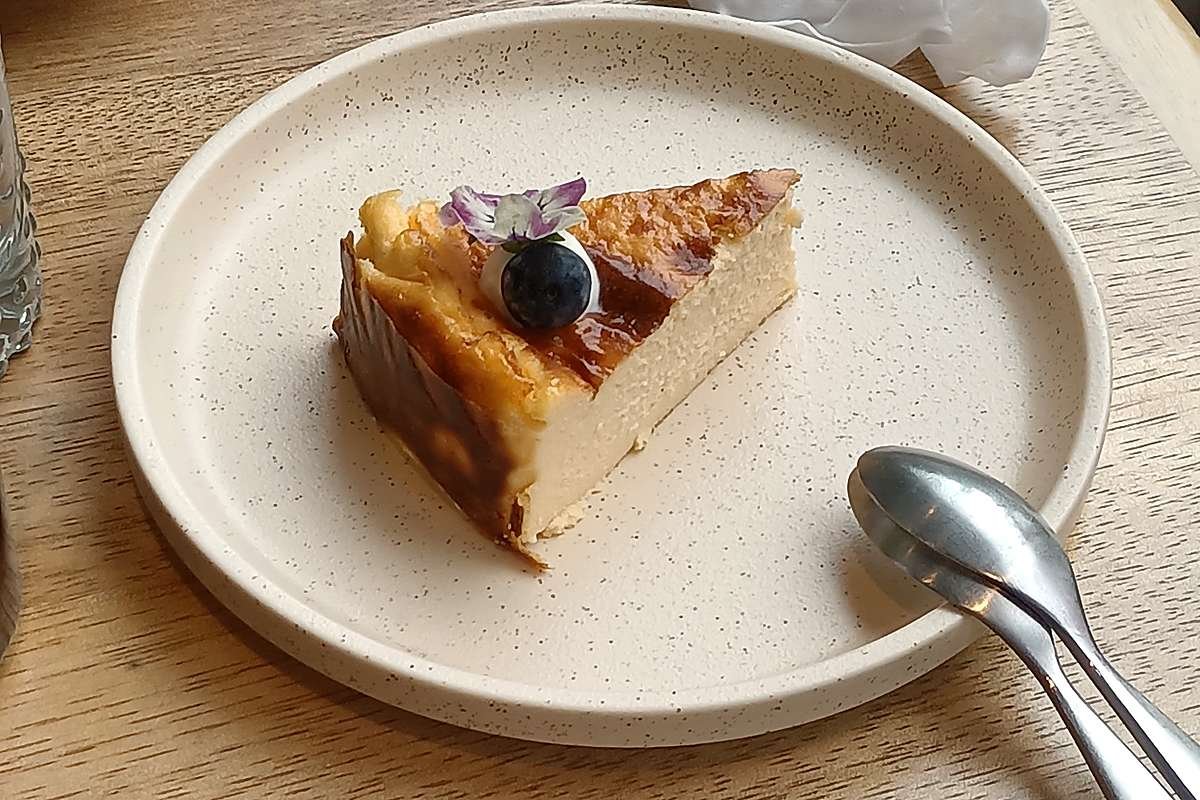
A slice of Basque burnt cheesecake with a dark caramelised top and creamy pale centre, topped with a fresh blueberry, on a speckled ceramic plate
One blueberry on top is all the garnish it needs. The dark top is the point — don't panic.

Photo: Fumikas Sagisavas, via Wikimedia Commons (CC0).

A quick note: some links below are Amazon affiliate links. If you buy through them, I earn a small commission at no extra cost to you — it keeps the recipes coming.

I spent years thinking cheesecake was a fussy thing. Water baths, cracked tops, springform leaks — the whole production felt like something other people's kitchens did, not mine.

Then this burnt cheesecake kept turning up. It is the one bake holding steady at around 74,000 searches a month while everything else spikes and fades, and this November it is even showing up on Thanksgiving tables in a pumpkin-spiced version. So I made the classic one on a Sunday, mostly because it has five ingredients and no crust to argue with.

What came out of the oven looked like a mistake. The top was dark enough that I stood there with the oven glove on, convinced I had ruined it, and the whole cake wobbled like jelly when I shook the pan. Four hours in the fridge later, it was the best cheesecake I have ever made at home: custard in the middle, caramel at the edges, and not a crack in sight. (You do need a proper 9-inch springform pan for this one. A regular cake tin will not release it, and the tall sides matter.)

Why you'll keep making these

  • Five ingredients, one bowl. No crust to make, no water bath to babysit, no cracking to worry about.
  • The burnt top is the point. Dark, patchy and dramatic is exactly right — this is the one cake you cannot over-brown by accident.
  • It is a make-ahead dessert. It needs a long chill, so you bake it the day before and slice it cold, which suits a dinner party perfectly.
  • One pan feeds ten. A slice each, a few blueberries on top, and it looks like a café pudding.

Method

  1. Heat the oven and line the pan

    Heat the oven to 425°F (220°C) with a rack in the centre. Line a 9-inch springform pan with two large sheets of parchment, crumpled first so they mould easily, crossing them so the paper stands about 2 inches above the rim. It will look messy. That is fine — the creases give the finished cake its rustic sides.

  2. Beat the cream cheese and sugar

    Beat the cream cheese and sugar together until completely smooth, scraping down the bowl once or twice. Any lumps left now are lumps in the finished cake, so take the extra minute. The mixture should look like thick frosting.

  3. Add the eggs, one at a time

    Add the eggs one at a time, beating each one in fully before adding the next, then beat in the vanilla and salt. The batter will loosen and turn glossy — that is what you want.

  4. Whisk the flour into the cream

    Whisk the flour into the heavy cream first, then pour the cream into the bowl and beat just until the batter is silky and smooth. Whisking the flour into the cream stops it clumping. Stop as soon as it comes together — too much beating whips in air and the cake puffs up and falls harder.

  5. Bake — and trust the wobble

    Pour the batter into the lined pan and bake for 40 to 50 minutes, until the top is deep mahogany with dark patches and the centre still wobbles like jelly when you nudge the pan. If you have an instant-read thermometer, it should read about 185°F one inch from the edge. Mine puffs up like a soufflé and then sinks as it cools — that is supposed to happen.

  6. Cool, then chill

    Leave the cake in the pan on the counter for 1 hour, then refrigerate for at least 4 hours, overnight if you can. Do not slice it warm. It will be soft in the middle and you will think it failed. It hasn't — it just isn't cold yet.

  7. Slice and serve

    Release the springform, peel the parchment down, and cut with a long knife dipped in hot water, wiping the blade between slices. Top each slice with a few fresh blueberries. Keeps covered in the fridge for up to 4 days — it slices better on day two. If you are taking it somewhere, a cake carrier is worth having; this one does not travel well on a bare plate.

Watch out: the top will look burnt. The first time I made this I nearly threw it out — it was dark enough to scare me. Dark is the flavour here: caramel, not charcoal. If the very edges go black in spots, that is still right. What you do need to watch is the wobble — pull it when the centre still moves like jelly, because it sets as it chills, and an extra ten minutes in the oven is the difference between custard and a firm, dry cake. This one is eggs and dairy all the way through, so it is not for anyone with an egg or milk allergy. No nuts in it.

That's the whole recipe. Five ingredients, one pan, and a cake that looks burnt on purpose. Some puddings earn their reputation the hard way — this one just needed a hot oven and a bit of nerve.